• Mules and Leopard Print and Ostrich Bags, Oh My!: A Crash Course in Cultural Anthropology

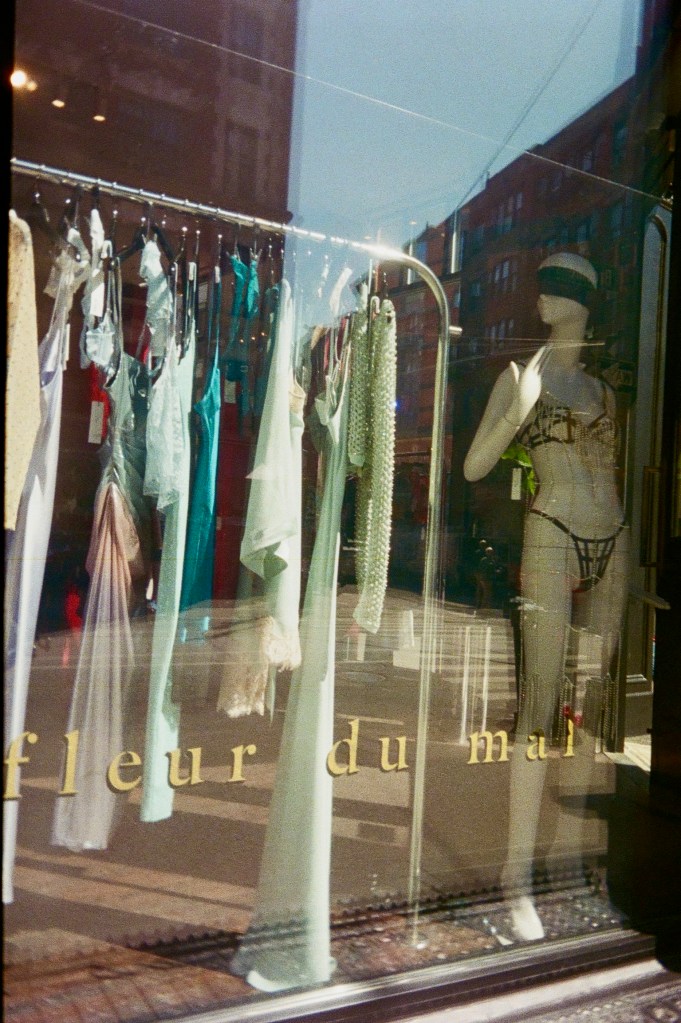
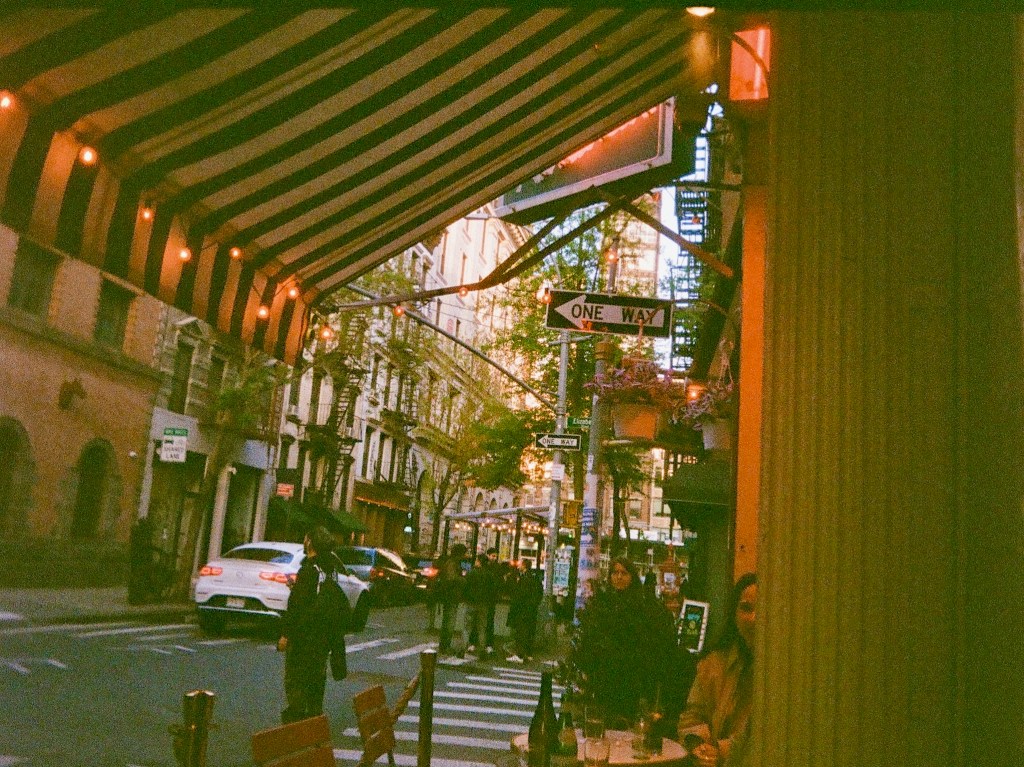
    Before I left for Europe, I’d started to lose interest in New York. Everyone was wearing pleather and black Doc Martens, wearing sweatpants to class. It was lazy in its style, the people at the club were stuck-up, and all the reservations for the outdoor seating on Lafayette Street in SoHo were taken up by what I disparagingly term the “unemployeds.” But absence makes the heart grow fonder, and coming back from studying abroad in London has made me see it in a new light. The people say “please” and “thank you” when you least expect it, I’m able to walk into my favorite restaurant with only a five minute wait, and the street style is more fashion-forward (and preppier, more well-coiffed) than the ridiculous and outrageous outfits on the New York Street style Instagram would have you believe.

    I walk through Nolita, SoHo, and Greenwich Village to get to class most days, taking detours through the West Village, East Village, and the LES when I’ve got time on my hands. I like Tribeca for its polish and glamour– stylish mothers pushing strollers with fresh blowouts, contemporary art galleries, little brunch places with families, and college friend meetups. I love the West Village for its collision of worlds – you see high-powered couples from Connecticut in long Burberry coats sharing the sidewalk with five teenagers from Long Island in their blue jeans and black top uniform, each holding the exact same matcha.
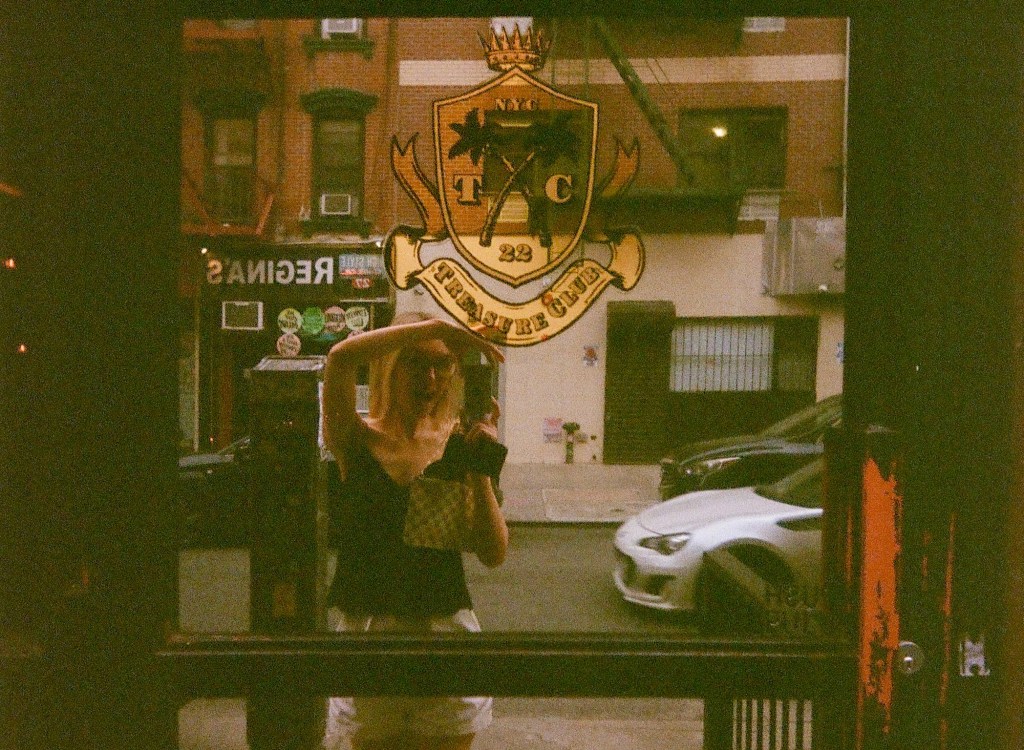
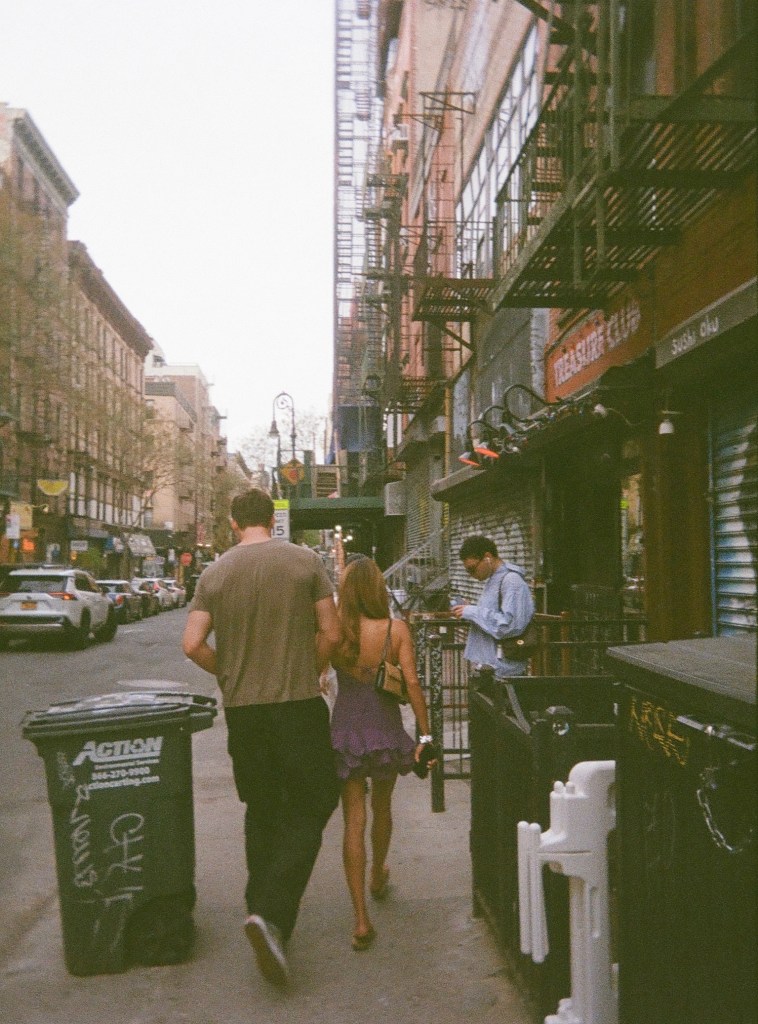
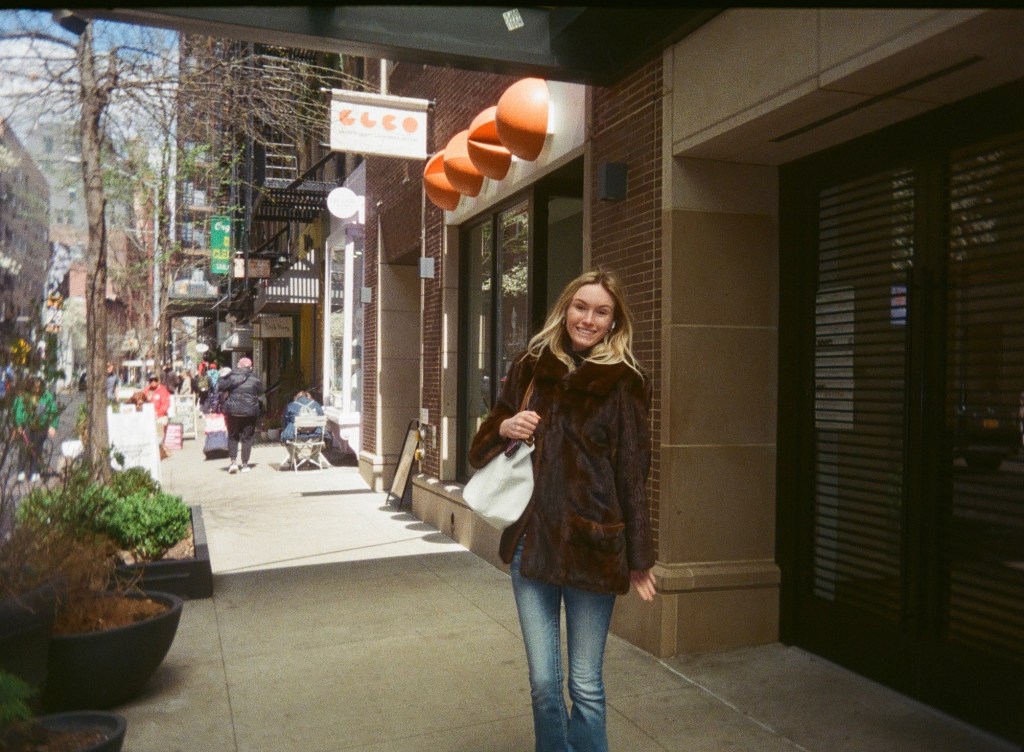
    I consider myself a cultural anthropologist in the truest street-style sense. I only recently realized that not everyone is watching the passerby as intently as I am – maybe not their personality, envisioning their lives outside of that moment, but certainly their outfits and the way they carry themselves – head held high, or, unfortunately, in most cases, shoulders slouched with a case of tech-neck. Something I’ve noted is that status here rarely announces itself the way you’d expect, a kind of elaborate camouflage. Everyone in Manhattan is wearing their status symbols: for men, a tee from Aimé Leon Dore, a Stüssy hoodie, or a Chrome Hearts hoodie; for women, a designer bag (take your pick of Prada nylon or Louis Vuitton Neverful), a fur coat, a pair of Manolo Blahnik heels. But those status symbols sometimes tend towards raggedy and unkempt, and the effect of that trend boggles my mind: why are bare nails considered a status symbol now? Why is the all-black sweat suit costing the man at Sant Ambroeus twenty thousand dollars, and why does he think it shows his self-importance more (I mean, he’s sitting in Sant Ambroeus, after all) than if he wore a polo and jeans? It’s interesting that you can’t always tell what someone does for a living, or whether they take the subway or have a driver, or what their apartment looks like. 

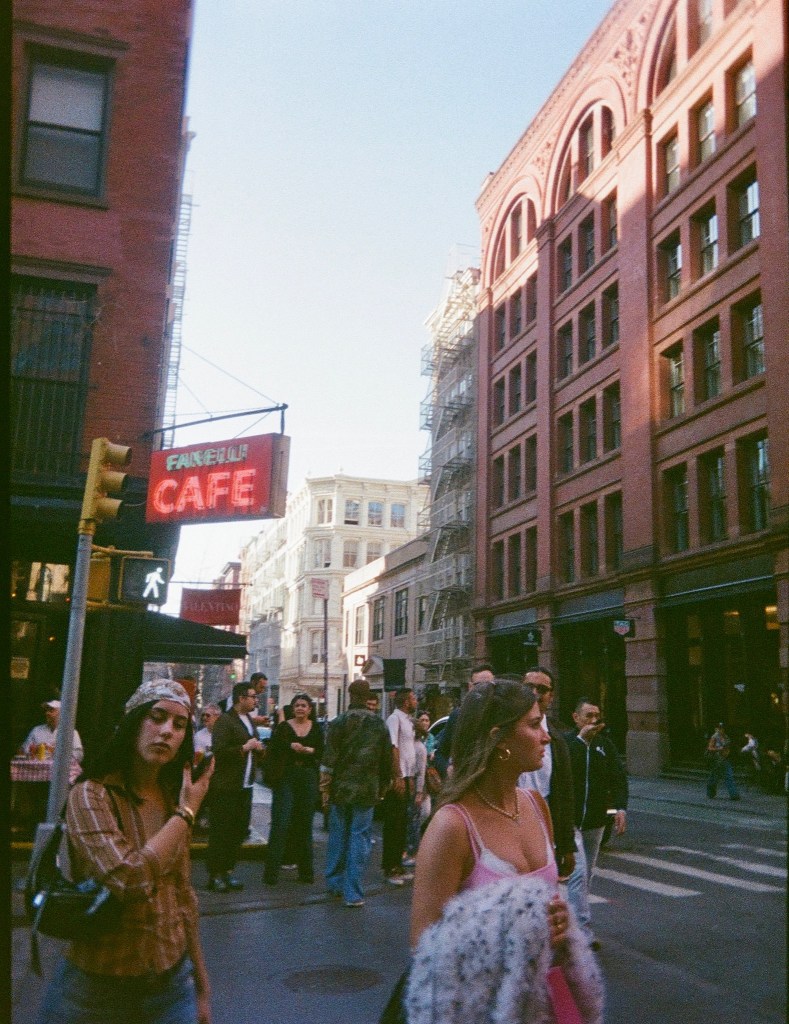
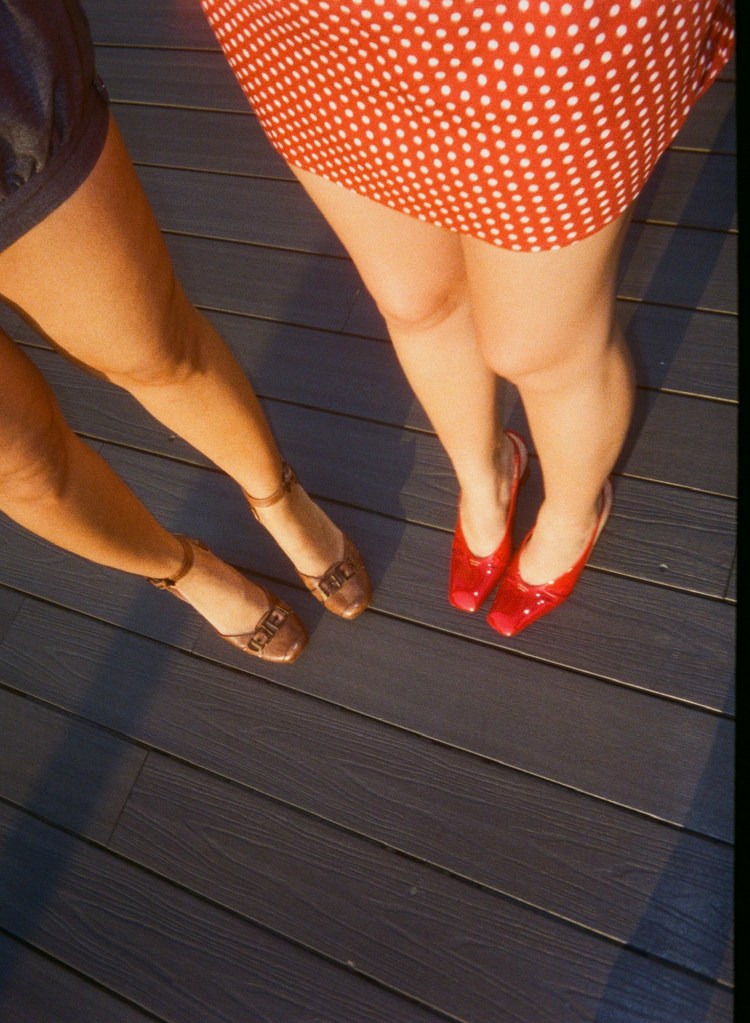
    Here’s what I’ve been noticing as of recent: the Alaïa mesh ballet flats (and every Alaïa-inspired knockoff from here to Zara); the bootcut jean revival; white-on-cream tonal dressing — think wide-leg linen trousers with a slouchy cream crewneck, Nantucket-prep gone downtown; the Adidas Gazelle, still going strong since 2016; tiny oval sunglasses on everyone (I’m partial to huge frames – so much more mysterious!); tailored office suiting worn by women lounging outside Sartiano’s, glancing at the chic passerbys at the crosswalk headed to iconic Fanelli’s, relaxing at the end of the workday; chic Europeans taking up every outdoor table at Sant Ambroeus in SoHo at 11 in the morning on a Tuesday; the line at Mimi’s stretching half a block for (mediocre) froyo. At night, the crowd waiting outside the Bowery Ballroom, Ray’s on Chrystie street, and the Box is doing something more interesting: slingback heels with sheer pantyhose (everyone’s committed, but I can’t get behind it – pick a season you’re dressing for!), studded rhinestone denim (on the legs, on the back pockets) and silver everything: Mary Janes, ballet flats, mules. Silver is basically a neutral now, whether you’re going to work or a dive bar on Orchard street.

    Speaking of places, some that I’ve noticed that have been weirdly drawing a chic crowd: Little Italy, not even the tourists, now it’s the yuppies, too. Tascha, the Portuguese place that’s only open on Thursdays, is always packed. Rintintin, my favorite restaurant in Manhattan (the chef recognizes me when I walk down the block, and I’m distracted from my favorite unwinding activity – intensely staring at what everyone’s wearing and what the solo diners are typing on their laptops). La Pecora Bianca with the aforementioned teens here for the day with their moms from Long Island; Leon’s bagels, especially on Mulberry street; Odd Sister in SoHo, a couple blocks away from my favorite store, Retrofete; I could keep going on and on, because once the temperature rises above 70, every restaurant south of Houston street, from Varick to Orchard, fills with the “unemployeds,” waiting on lines of all sorts, from the New York or Nowhere shop to the Mexican place, Michtlan, in Dimes Square. 

    Summer is the season that’s best to show off feminine style – billowy maxi-skirts, flowy blouses, the kind of easy, unselfconscious dressing that’s like Carrie Bradshaw’s style crossed with the dreamiest fashion show, which is obviously the Gianni Versace spring 1995 fashion show. My one unwavering conviction: if it’s fake, don’t wear it. Pleather and faux fur almost always look gaudy. They look cheaper than ordinary polyester, because they’re obvious imitations, the fashion equivalent of a knockoff Missoni print on an Amazon bikini, or a polyester blouse someone at a vintage shop is hoping you’ll mistake for Pucci.

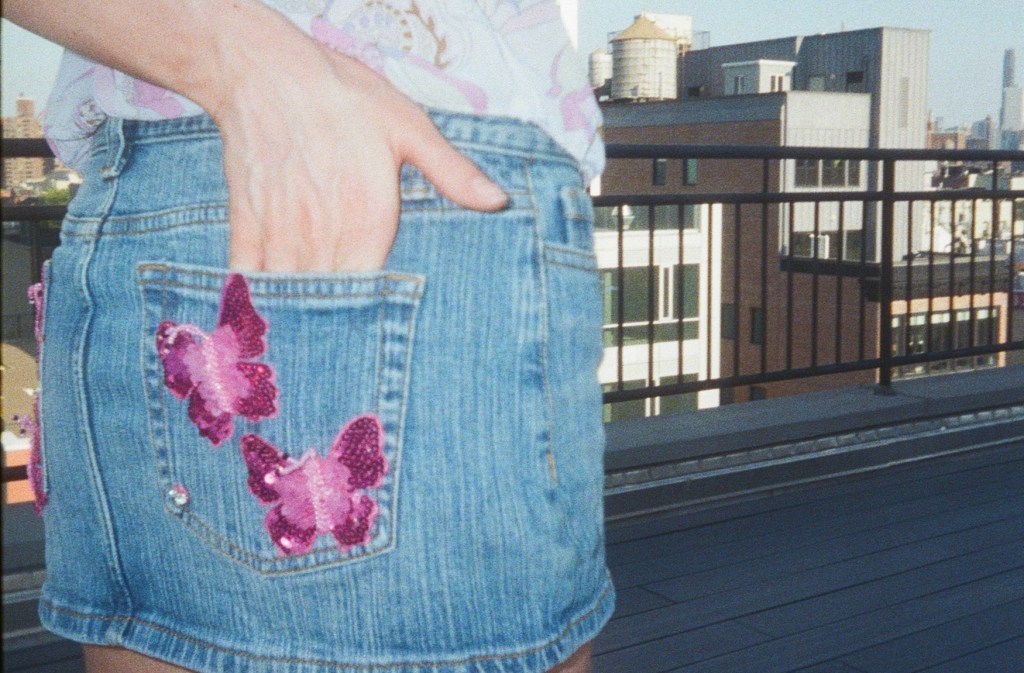
    Other things I’ve seen on repeat this season: black athletic skin-tight romper bodysuits (not a fan, too simple), capris making a return, a lot of turquoise, pointed-toe flats with little buckles, silk shorts paired with an oversized Knicks tee (laundry day?), chunky pearl necklaces, long gingham dresses and seersucker doing the prairie-meets-prep thing, and the New Balance 530 sneakers (I love their silver and shine!). One sincere loss, though: nautical fashion is basically gone this season. A navy striped marinière, Ralph Lauren crewneck sweaters, wide-leg sailor trousers…

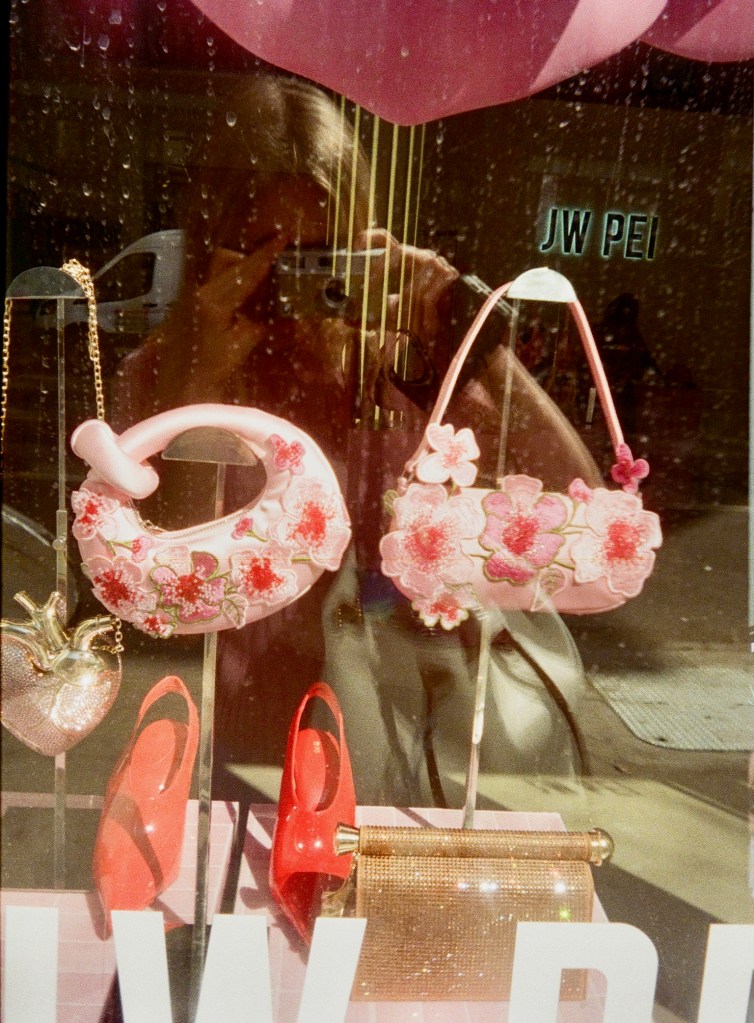
    The pop-up economy on Broome and Spring Streets has been a real bright spot. In recent weeks alone: Alice + Olivia, Retrofête, Rag & Bone, Lanvin, Veronica Beard, JW Pei with those colorful rhinestone bags. These are brands that are not fast fashion, not disposable, not boring, for the most part. Which brings me to my broader conviction about getting dressed: every single piece you own should have a little twist to it. Even a black top – especially a black top! It’s what separates a person who simply wears clothes from a person who puts effort and self-confidence in what they purchase and how they present themselves. Stores like Everlane and & Other Stories are technically fine, I guess, the quality is there, but they’ve built entire aesthetics around the absence of a twist, an aesthetic of “blah” and shapeless and self-consciousness – not exactly something to get excited about. 
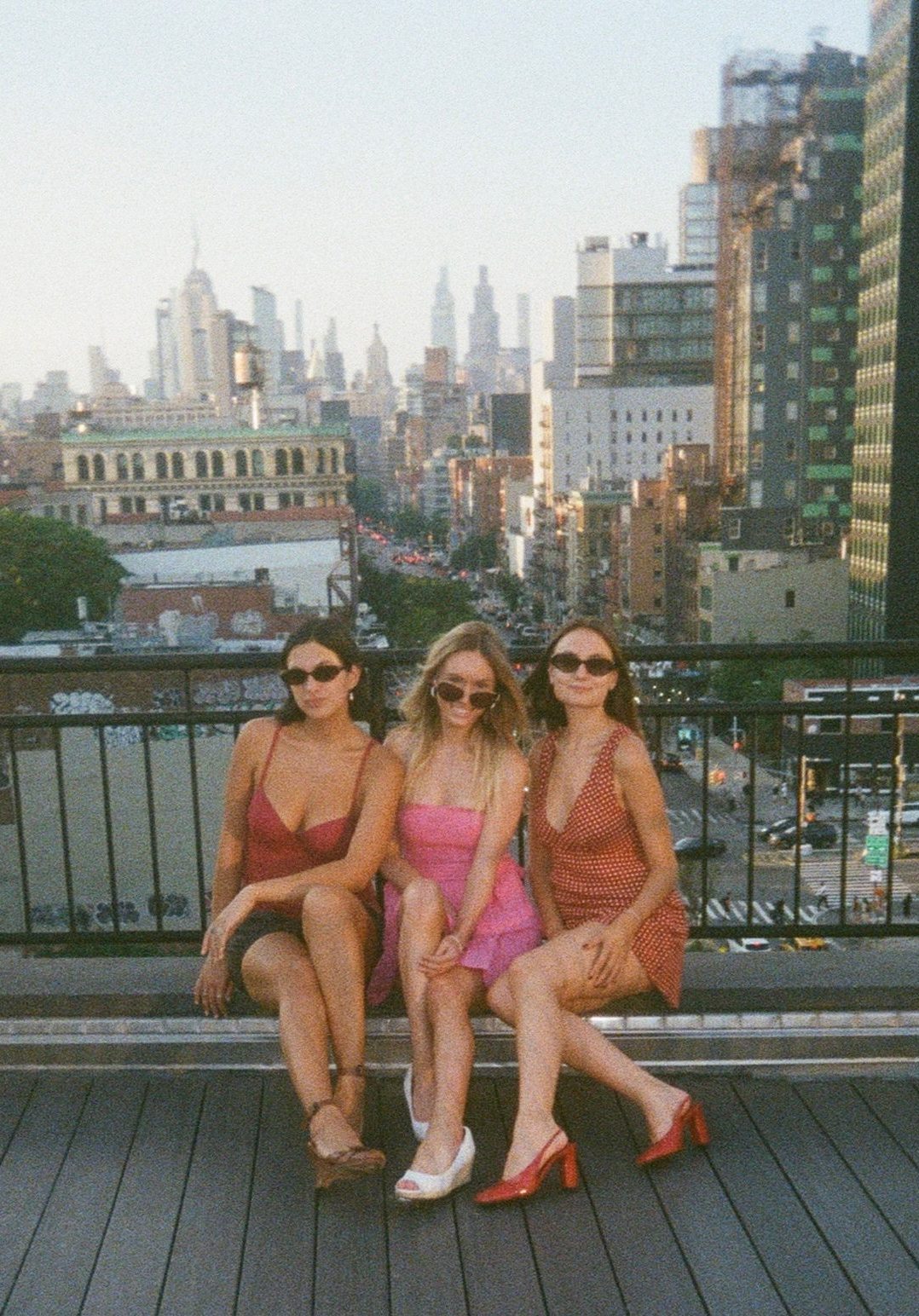
    There’s no definitive guide to any of this, which is both a frustration and a pleasure (keeping the spots local). Eater and Time Out just can’t capture it: the Mulberry Street happy hour crowd spilling onto the sidewalk, the forever-packed room at Cipriani Downtown glowing under its yellow awning from noon to midnight, the joy of Stone Street in FiDi on St. Patrick’s Day. The city’s best social information still travels by word of mouth and pure dumb luck (usually on a day where you hit twenty thousand steps). And you can’t spell word of mouth without thinking of Sunbleacht. Puzzle that one out, I dare you!

  • Pumps, Polos, and Pencil Skirts: An Intern’s Guide to Officewear

    There’s a difference between an appropriate work outfit and a fantastic work outfit. Of course, you want to be noticed for your hard work, given the return offer, promoted for your ability to exceed expectations. But adding onto my earlier notes on European fashion, you dress up to make yourself look more polished, because you have self-respect to get up in the morning and not wear sweatpants and lounge around all day. And it’s a superficial reflection of self, sure, but it shows where you choose to shop in your free time, if you’re bold or basic (totally fine and acceptable at work – I branch out in style after I clock out), and if you notice the finer details, like how a notch blazer is less showy versus a peak blazer that’s more defined. 

    I’ll limit my scope here to women’s fashion, since that’s what I know best. Although – digression – if a guy dresses nicely, it stands out, like a nice turquoise polo on a summer day, and I love a salmon pink Oxford shirt and navy slacks combination. I guess no one wears cufflinks anymore, or ties, even, but I think the accessories, for men at least, is a nice touch of individuality and taste in an otherwise ubiquitous sea of office suits in Midtown.

    Let’s start with the obvious. All black makes you look like you’re attending a funeral. Ridiculously oversized makes you look insecure or very unattuned to social cues, unless maybe it’s casual Friday and you’re digging out boyfriend jeans. Although I could never wear balloon pants, as a rule – if Vogue says they’re in style, they need to fire the industry fashion plants that voiced that absurd opinion in the first place. 

    I think that polyester vests that button down the middle look tacky. Polyester clothes are tacky, period, but the vests in particular with the little divot at the bottom that shows off the navel is really kind of revolting. J. Crew used to have such nice cotton basics, and now whenever I walk into the store, I’m touching plastic, and, shamefully for the brand, I don’t know if it’s the mannequin or the clothes she’s wearing. 

    White and cream don’t look good together (say, a pencil skirt and a shirt) in almost all cases – it just looks like you didn’t have the exact matching color, and rather lazily tried to pull a matching set off. I do think that Mary Janes make you look like you’re five years old. 

    Work dresses are a bit of a grey area for me. I’ve realized, through my own observation, that they can be pulled off well, or they can look frumpy or cheap, and it’s tough to strike a balance. Long work dresses, especially those with a tighter waist and made with synthetic fabrics – sometimes even linen – remind me a bit of Laura Ingalls Wilder. With a short work dress, you run the risk of it being too short, but they do generally are easier to wear without tailoring. Work dresses, because they tend towards the slouchy, is an item of clothing I’d break my never-all-black rule, because making a black outfit look frumpy is more difficult (even though it does make you look a little morose, I think.)

    Now onto what makes you look nice. 

    At a recent work gala, with an evening dress code, I noticed a few nice Zimmermann dress, a yellow Maje silk dress with a rhinestone collar, two light blue long button down linen dresses, in steel blue and cobalt blue, that looked sharp and yet mature and appropriate (probably worn straight from work). A couple of pink and light blue dresses from Nana Jacqueline as well. My favorite look, besides the Maje rhinestone dress, was an baby-blue asymmetric empire dress, maybe from Anthropologie, and generally I’m not a huge fan of that brand (too “clean girl,” no whimsy), but it was such an eye-catcher and conversation -starter!

    For the office, all navy is a classic. I have a navy Tahari blazer that I adore, maybe a little more business-casual based on the cotton material, but defined by tiny gold buttons down the middle and white edges that line invisible pockets on the waist. Aritizia’s not my favorite – it’s overpriced, and the materials are pretty low quality for that price – but I have a pair of navy chinos from there that fit me like I’ve gotten them tailored. Pleated pants are adorable and classy – I have a grey pair with the faintest stripes going vertically (stripes should almost always go vertically!) 

    Speaking of pleats, the long skirts with many little pleats look adorable – polka dots were in style last year, and I wish they’d make a comeback. Cherry red was the “in” color last year, and I dearly miss it, because it’s just dashing and so fun. I am just itching to go out and buy a fit-and-flare top for work in either a cherry or a burgundy color, but I’ve got to hold myself back after my Ralph Lauren eBay spree (my favorite life hack for discounts, because I’ve never found anything that looks nice and fits me in an American vintage store).

    On matching colors: a woman that sits near me wears a light pink blazer with matching heels, and I think it’s fantastic and so simple to do that. The French and British women go even further and match their belts to their shoes and blazer, which is just top-notch coordination to me. I love an Oxford long-sleeve polo (bonus if it’s striped) under a knit crewneck. Frilly high-neck collars with bows and ruffles may seem like they’re in the same first-day-of-kindergarten type of outfit, but with artful design and parameters of “good taste,” I really do think they make a top stand out in a positive way – especially if it’s a neutral color. 

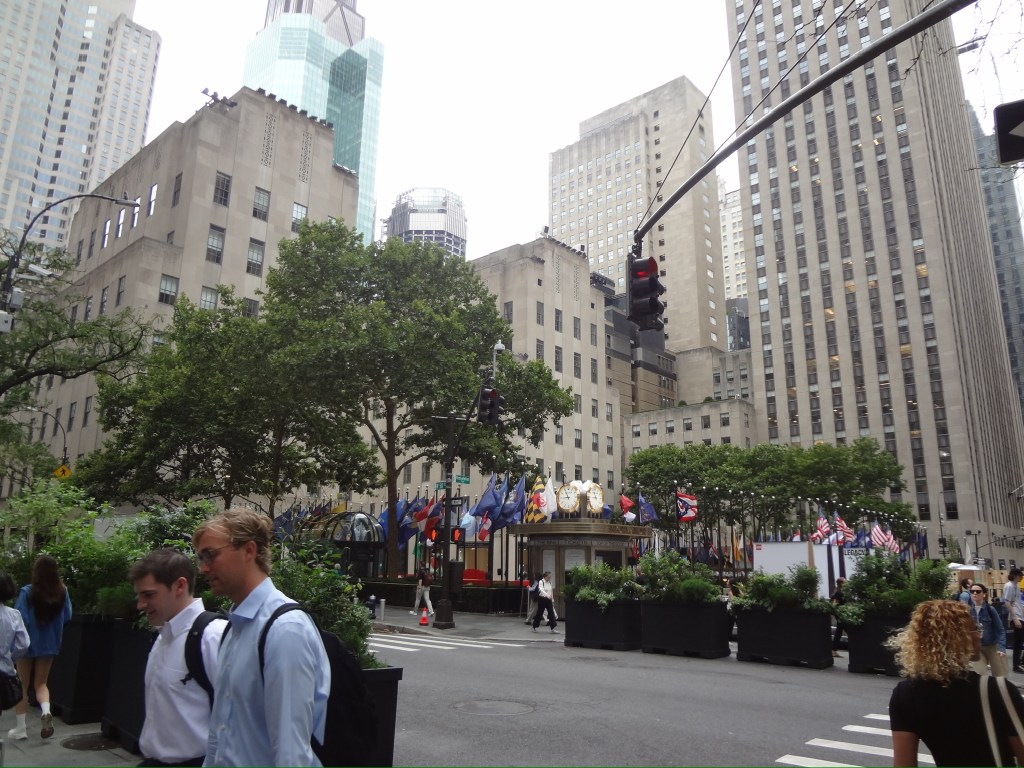
    I could go on at length discussing color combinations, fabric layering, and accessory pairings that I’ve seen, walking down the street, that are more creative than any work-related ideas that Pinterest or Instagram could serve up for me. In a way I’m glad I haven’t curated my feed enough – it leaves me to notice the details in-person, because, at my core, I’m distrustful of everything I see online. Who knows if the influencer that pops up was paid to promote a product, and then you’re subconsciously influenced to buy that brand that’s got this particular brown suede skirt in stock? The model – or the clothes on the model – could be AI-generated, for crying out loud! Being online is a poor substitute for seeing an outfit in-person – I’ve been duped too many times, and I refuse to give another dollar to a store that’ll ship me plastic imitating something that could be worn on your body. SO seeing the people in real-time in FiDi and Midtown – going about their day with steely looks and an air of confidence – drives me, a little bit, part in a competitive spirit (I think to myself– I can work just as hard as her!) but also part from my own interest in cultural anthropology. Hell, my style improved just in the first four weeks of my internship for that reason alone!

  • Notes on the Art of Dressing Well: Observations from Europe

    One of my favorite pastimes is looking at how people dress. Fashion feels wonderfully alive to me, something to play with and observe, a language of its own in fabric and silhouette. I had such fun noticing the differences between European (an overgeneralization, of course, given the regional nuances) and New York fashion. The distinctions, which I will try to untangle here, seem shaped far more by climate than by taste alone. You will not need a coat in Mallorca, and in Tromsø you will be grateful for anything insulated before you begin to think about aesthetics, save perhaps for a bikini in a sauna before a polar plunge into the harbor’s ice-cold water.

    In London, I saw ballet flats, heels, and boots everywhere; sneakers on women were comparatively rare, especially when contrasted with New York. Beige coats dominated the streets—some unmistakably Burberry, others renditions. In London, heels and boots seemed nearly universal; yes, women in New York wear them too, yet the prevalence of a heeled boot throughout Europe creates an impression of height and refinement that subtly alters posture.  Walking through the financial district, not Canary Wharf with its glass towers to the east but the one-square-mile City of London itself, I was struck by the visible effort women put into their workwear. I do not often walk through Midtown during the morning commute, so perhaps I miss something, yet in New York the black summer suit appears almost obligatory, which feels dreary given the possibilities of color and fabric available to professional clothing. Even in SoHo’s Aritzia, where certain pieces are still somewhat charming, the lack of natural fibers makes the clothing faintly lifeless despite the scattered pale pink and light blue hues.

    I would sometimes go to class without makeup, maybe wet hair, and feel a bit unfinished, almost like I had forgotten to brush my teeth or put my shoes on, because so many women wore lipstick, styled hair, and had an air of deliberate polish– I loved their effort, their preparation! I noticed a lot of bright reds, as well as coordinated belts, boots, and bags (especially dark brown or purple). In New York, I’ll notice a range of fur coats – mostly faux, occasionally rabbit, sometimes mink – which are impractical for London’s damp climate. In my opinion, a faux fur collar can be elegant but an entire coat looks garish.

    Harrods, the department store, deserves mention. The gift shop alone was where the theories in my class on British design came alive: stationery, water bottles, umbrellas, all-bearing William Morris prints, Victorian flourishes, and that particular British affection for nature and calligraphy. Every object, down to the pens, was bespoke. I left with a light blue Harrods toile tote for summer, and a green menagerie-themed pen and stationery set: all my holiday cards for the year were written on those!

    Bruges, Belgium, surprised me with its colorful sartorial selection. I brought home a huge white scarf, delicate lavender gloves, and a pink mohair sweater that looked like a very well-bred cloud, along with pieces influenced by Antwerp, often called Belgium’s fashion capital. The textures felt alive – and I thoroughly appreciated the look of fluffy mohair afterwards!

    Positano’s boutiques were astonishingly expensive, but the patterns were too magnificent to dismiss on price alone. A dark blue bikini with polka-dot lemons caught my eye (I swear I couldn’t stop admiring it for five full minutes); a coral sundress stole my heart. Tourists chose structured sun hats over classically American baseball caps and flowing skirts over denim; long patterned trousers for those riding motorcycles, sometimes leather if one arrived prepared. Beyond fashion, the sculptural, painted, and ceramic galleries awed me beyond comparison (and so did those craggy mountains overlooking the Amalfi coast!), and though my suitcase and budget discouraged indulgence, I wished I could have brought some art home.

    Rome and Trieste offered beautifully made clothing at astonishingly modest prices, from long fall coats trimmed with faux fur to linen dresses and silk tops. My only hesitation was tailoring; they were pretty much one-size-fits-all, and many garments would need adjustment (I need to learn to sew anyway!). In a Roman vintage store, I found real fur boots no longer produced by MoonBoot, created by an owner who once lived above Caffè Reggio in Greenwich Village in the 1990s, and I carried them home for a fraction of what I would have paid in the United States.

    In Prague and Paris, fur coats lined the streets and filled shop windows, and vintage and consignment shopping seemed like a cultural habit rather than an occasional indulgence. In Prague, I visited a shop where Louis Vuitton second-hand purses were priced at a quarter of their American equivalents. I particularly loved the independent boutiques and store concepts: I even encountered a café-bar-laundromat hybrid, quite practical and charming. The color palette skewed darker there, closer to New York’s signature black sartorial palette.

    Conversely, Berlin surprised me by how little black I saw during the day: like London, there were plenty of beige and soft neutrals. Vienna and Bratislava leaned more alternative, closer to what one imagines of Berlin’s daytime aesthetic. At night, however, fashion shifted dramatically, especially in certain clubs that shall remain unnamed, where clothing became minimal… and whatever remained on had to be, well, sexy, panther-like.

    In Mallorca, I focused on their jewelry stores (to be honest, the clothes were geared towards middle-aged German tourists). I purchased several silver bracelets and a real pearl one from two different shop owners who were generous with their time and stories. The first shop, tucked away on a quiet street near Palma’s cathedral, displayed silver bracelets that caught the sunlight beautifully, mesmerizingly. Around that time, I decided to commit more seriously to silver, which complements my pale skin better than gold ever has (tragic!). The pearl jeweler from one of the aforementioned stores chatted with me for an hour in the midmorning, explaining oyster cultivation practices in China and Australia and the global demand for Mallorca’s factory-made pearls. I chose a real one, slightly irregular and cream-toned (shockingly student-budget appropriate, mind you).

    Fashion in Tromsø occupies a different category altogether. Everything was ridiculously expensive, being so far away from the rest of the world’s commerce: a casual restaurant burger was thirty-four dollars. There were few fashion boutiques, which is understandable in a place where the need for warmth supersedes aesthetics. To stand out, though, the gift shops leaned heavily into bold “Norway” lettering as part of their appeal. I relied on my chic fur boots from that thrift shop in Rome, thermal layers, and the white Bruges scarf to endure the cold. In the Polar Museum, wax figures dressed in fur-lined hats and coats, commonplace here before mass-produced Canada Goose parkas took over. It was neat to see that Arctic exploration was done in outerwear both functional and enviable (I’ve hardly seen a nicer coat during NY Fashion Week!).

    If I regret anything, it is not purchasing more jewelry, which tends to be more expensive and less durable in the United States. Much of the faux gold that’s now in style appears tacky and garish, and unsuitable for water, which defeats its purpose for me since I refuse to remove bracelets at the beach. 

    Back to clothing ethics and basics: sustainability and durability distinguish what feels enduring from what quickly falls apart. Fabrics must match and flow easily into one another; matching accessories create a nice sense of coherence. In A Very Short Introduction to Beauty, which I enjoyed reading on trips through London’s Underground, the author writes that fashion “permits people to play with appearances, to send recognizable messages to the society of strangers, and to be at one with their own appearance in a world where appearances count.” That sentiment validated my distaste for certain parts of New York’s prevailing style before I left: sweatpants, oversized silhouettes, and ubiquitous leggings often project something too casual to take oneself seriously.

    What I saw across many European cities was a sense of self-certainty expressed through dress, a willingness to participate in one’s own presentation.

    Interestingly, Europe has recently taken a legislative step that may reinforce that attitude toward clothing. New regulations under the European Union’s Corporate Sustainability Due Diligence Directive (CSDDD) establish a framework requiring large companies—generally those with more than 1,000 employees—to conduct due diligence regarding human rights violations and environmental impacts across their supply chains. Among other things, the law makes it far more difficult for companies to rely on loosely regulated overseas subsidiaries to produce clothing without accountability for labor practices or sustainability standards.

    While these rules primarily affect the largest brands, they represent a meaningful step in addressing the harms of fast fashion, which has become damaging both to the environment and to the workers who produce inexpensive garments at scale. Beyond those structural concerns, fast fashion also carries an aesthetic consequence: clothing made to be disposable often looks disposable. The effect can feel disconnected, as though the wearer has little relationship to the objects they choose to put on their body.

    Dressing well, in the sense I observed across many European streets, seems tied to a different mentality — one that values durability, materials, and intention. If clothing is a form of self-expression, it is difficult to separate that expression from the conditions under which it was made. As reasoning beings, the choices we make about what we buy inevitably reflect the values we hold, and there is something quietly satisfying about purchasing from companies that attempt to uphold ethical standards while producing garments meant to last.

    Fashion, after all, is not simply decoration; it is participation.