One of my favorite pastimes is looking at how people dress. Fashion feels wonderfully alive to me, something to play with and observe, a language of its own in fabric and silhouette. I had such fun noticing the differences between European (an overgeneralization, of course, given the regional nuances) and New York fashion. The distinctions, which I will try to untangle here, seem shaped far more by climate than by taste alone. You will not need a coat in Mallorca, and in Tromsø you will be grateful for anything insulated before you begin to think about aesthetics, save perhaps for a bikini in a sauna before a polar plunge into the harbor’s ice-cold water.
In London, I saw ballet flats, heels, and boots everywhere; sneakers on women were comparatively rare, especially when contrasted with New York. Beige coats dominated the streets—some unmistakably Burberry, others renditions. In London, heels and boots seemed nearly universal; yes, women in New York wear them too, yet the prevalence of a heeled boot throughout Europe creates an impression of height and refinement that subtly alters posture. Walking through the financial district, not Canary Wharf with its glass towers to the east but the one-square-mile City of London itself, I was struck by the visible effort women put into their workwear. I do not often walk through Midtown during the morning commute, so perhaps I miss something, yet in New York the black summer suit appears almost obligatory, which feels dreary given the possibilities of color and fabric available to professional clothing. Even in SoHo’s Aritzia, where certain pieces are still somewhat charming, the lack of natural fibers makes the clothing faintly lifeless despite the scattered pale pink and light blue hues.

I would sometimes go to class without makeup, maybe wet hair, and feel a bit unfinished, almost like I had forgotten to brush my teeth or put my shoes on, because so many women wore lipstick, styled hair, and had an air of deliberate polish– I loved their effort, their preparation! I noticed a lot of bright reds, as well as coordinated belts, boots, and bags (especially dark brown or purple). In New York, I’ll notice a range of fur coats – mostly faux, occasionally rabbit, sometimes mink – which are impractical for London’s damp climate. In my opinion, a faux fur collar can be elegant but an entire coat looks garish.
Harrods, the department store, deserves mention. The gift shop alone was where the theories in my class on British design came alive: stationery, water bottles, umbrellas, all-bearing William Morris prints, Victorian flourishes, and that particular British affection for nature and calligraphy. Every object, down to the pens, was bespoke. I left with a light blue Harrods toile tote for summer, and a green menagerie-themed pen and stationery set: all my holiday cards for the year were written on those!
Bruges, Belgium, surprised me with its colorful sartorial selection. I brought home a huge white scarf, delicate lavender gloves, and a pink mohair sweater that looked like a very well-bred cloud, along with pieces influenced by Antwerp, often called Belgium’s fashion capital. The textures felt alive – and I thoroughly appreciated the look of fluffy mohair afterwards!
Positano’s boutiques were astonishingly expensive, but the patterns were too magnificent to dismiss on price alone. A dark blue bikini with polka-dot lemons caught my eye (I swear I couldn’t stop admiring it for five full minutes); a coral sundress stole my heart. Tourists chose structured sun hats over classically American baseball caps and flowing skirts over denim; long patterned trousers for those riding motorcycles, sometimes leather if one arrived prepared. Beyond fashion, the sculptural, painted, and ceramic galleries awed me beyond comparison (and so did those craggy mountains overlooking the Amalfi coast!), and though my suitcase and budget discouraged indulgence, I wished I could have brought some art home.
Rome and Trieste offered beautifully made clothing at astonishingly modest prices, from long fall coats trimmed with faux fur to linen dresses and silk tops. My only hesitation was tailoring; they were pretty much one-size-fits-all, and many garments would need adjustment (I need to learn to sew anyway!). In a Roman vintage store, I found real fur boots no longer produced by MoonBoot, created by an owner who once lived above Caffè Reggio in Greenwich Village in the 1990s, and I carried them home for a fraction of what I would have paid in the United States.

In Prague and Paris, fur coats lined the streets and filled shop windows, and vintage and consignment shopping seemed like a cultural habit rather than an occasional indulgence. In Prague, I visited a shop where Louis Vuitton second-hand purses were priced at a quarter of their American equivalents. I particularly loved the independent boutiques and store concepts: I even encountered a café-bar-laundromat hybrid, quite practical and charming. The color palette skewed darker there, closer to New York’s signature black sartorial palette.
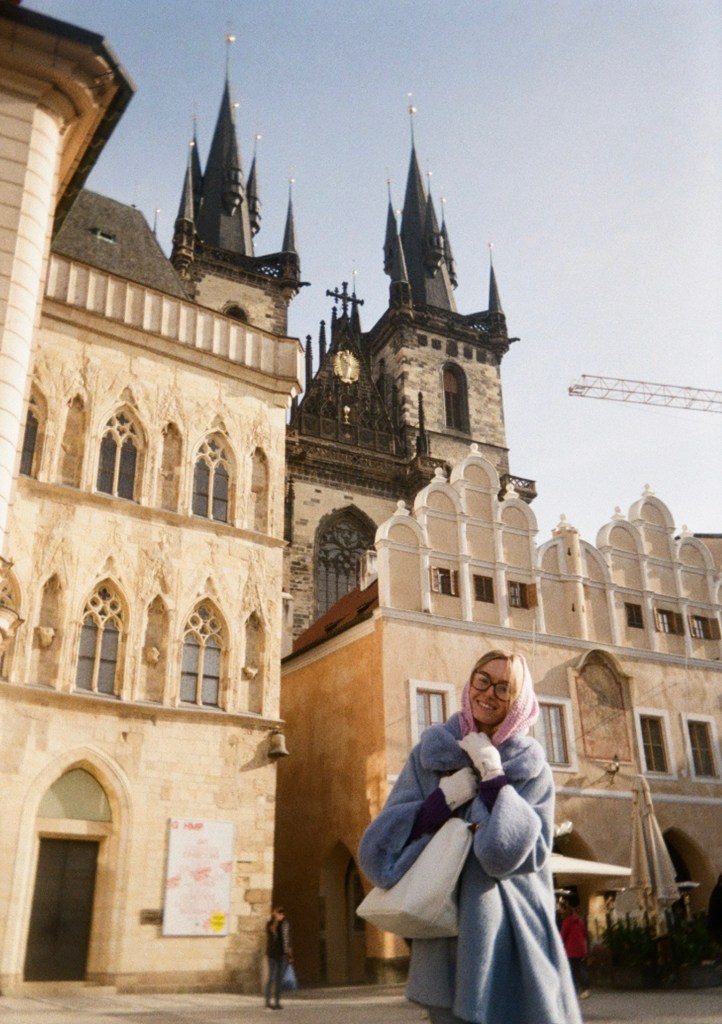
Conversely, Berlin surprised me by how little black I saw during the day: like London, there were plenty of beige and soft neutrals. Vienna and Bratislava leaned more alternative, closer to what one imagines of Berlin’s daytime aesthetic. At night, however, fashion shifted dramatically, especially in certain clubs that shall remain unnamed, where clothing became minimal… and whatever remained on had to be, well, sexy, panther-like.
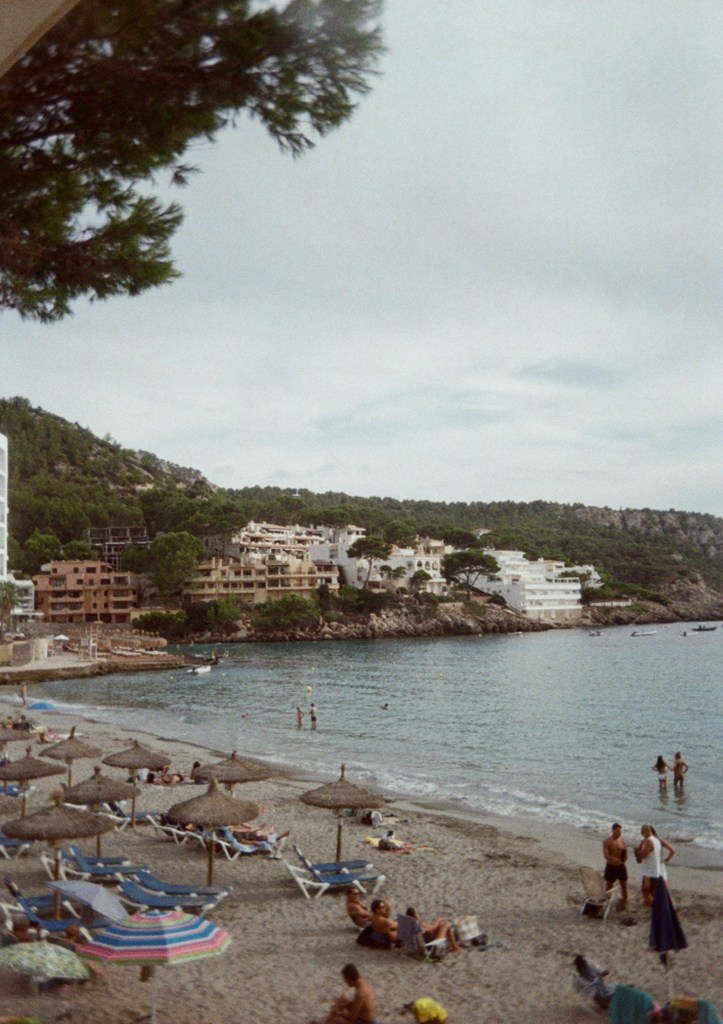
In Mallorca, I focused on their jewelry stores (to be honest, the clothes were geared towards middle-aged German tourists). I purchased several silver bracelets and a real pearl one from two different shop owners who were generous with their time and stories. The first shop, tucked away on a quiet street near Palma’s cathedral, displayed silver bracelets that caught the sunlight beautifully, mesmerizingly. Around that time, I decided to commit more seriously to silver, which complements my pale skin better than gold ever has (tragic!). The pearl jeweler from one of the aforementioned stores chatted with me for an hour in the midmorning, explaining oyster cultivation practices in China and Australia and the global demand for Mallorca’s factory-made pearls. I chose a real one, slightly irregular and cream-toned (shockingly student-budget appropriate, mind you).

Fashion in Tromsø occupies a different category altogether. Everything was ridiculously expensive, being so far away from the rest of the world’s commerce: a casual restaurant burger was thirty-four dollars. There were few fashion boutiques, which is understandable in a place where the need for warmth supersedes aesthetics. To stand out, though, the gift shops leaned heavily into bold “Norway” lettering as part of their appeal. I relied on my chic fur boots from that thrift shop in Rome, thermal layers, and the white Bruges scarf to endure the cold. In the Polar Museum, wax figures dressed in fur-lined hats and coats, commonplace here before mass-produced Canada Goose parkas took over. It was neat to see that Arctic exploration was done in outerwear both functional and enviable (I’ve hardly seen a nicer coat during NY Fashion Week!).


If I regret anything, it is not purchasing more jewelry, which tends to be more expensive and less durable in the United States. Much of the faux gold that’s now in style appears tacky and garish, and unsuitable for water, which defeats its purpose for me since I refuse to remove bracelets at the beach.
Back to clothing ethics and basics: sustainability and durability distinguish what feels enduring from what quickly falls apart. Fabrics must match and flow easily into one another; matching accessories create a nice sense of coherence. In A Very Short Introduction to Beauty, which I enjoyed reading on trips through London’s Underground, the author writes that fashion “permits people to play with appearances, to send recognizable messages to the society of strangers, and to be at one with their own appearance in a world where appearances count.” That sentiment validated my distaste for certain parts of New York’s prevailing style before I left: sweatpants, oversized silhouettes, and ubiquitous leggings often project something too casual to take oneself seriously.
What I saw across many European cities was a sense of self-certainty expressed through dress, a willingness to participate in one’s own presentation.
Interestingly, Europe has recently taken a legislative step that may reinforce that attitude toward clothing. New regulations under the European Union’s Corporate Sustainability Due Diligence Directive (CSDDD) establish a framework requiring large companies—generally those with more than 1,000 employees—to conduct due diligence regarding human rights violations and environmental impacts across their supply chains. Among other things, the law makes it far more difficult for companies to rely on loosely regulated overseas subsidiaries to produce clothing without accountability for labor practices or sustainability standards.
While these rules primarily affect the largest brands, they represent a meaningful step in addressing the harms of fast fashion, which has become damaging both to the environment and to the workers who produce inexpensive garments at scale. Beyond those structural concerns, fast fashion also carries an aesthetic consequence: clothing made to be disposable often looks disposable. The effect can feel disconnected, as though the wearer has little relationship to the objects they choose to put on their body.
Dressing well, in the sense I observed across many European streets, seems tied to a different mentality — one that values durability, materials, and intention. If clothing is a form of self-expression, it is difficult to separate that expression from the conditions under which it was made. As reasoning beings, the choices we make about what we buy inevitably reflect the values we hold, and there is something quietly satisfying about purchasing from companies that attempt to uphold ethical standards while producing garments meant to last.
Fashion, after all, is not simply decoration; it is participation.